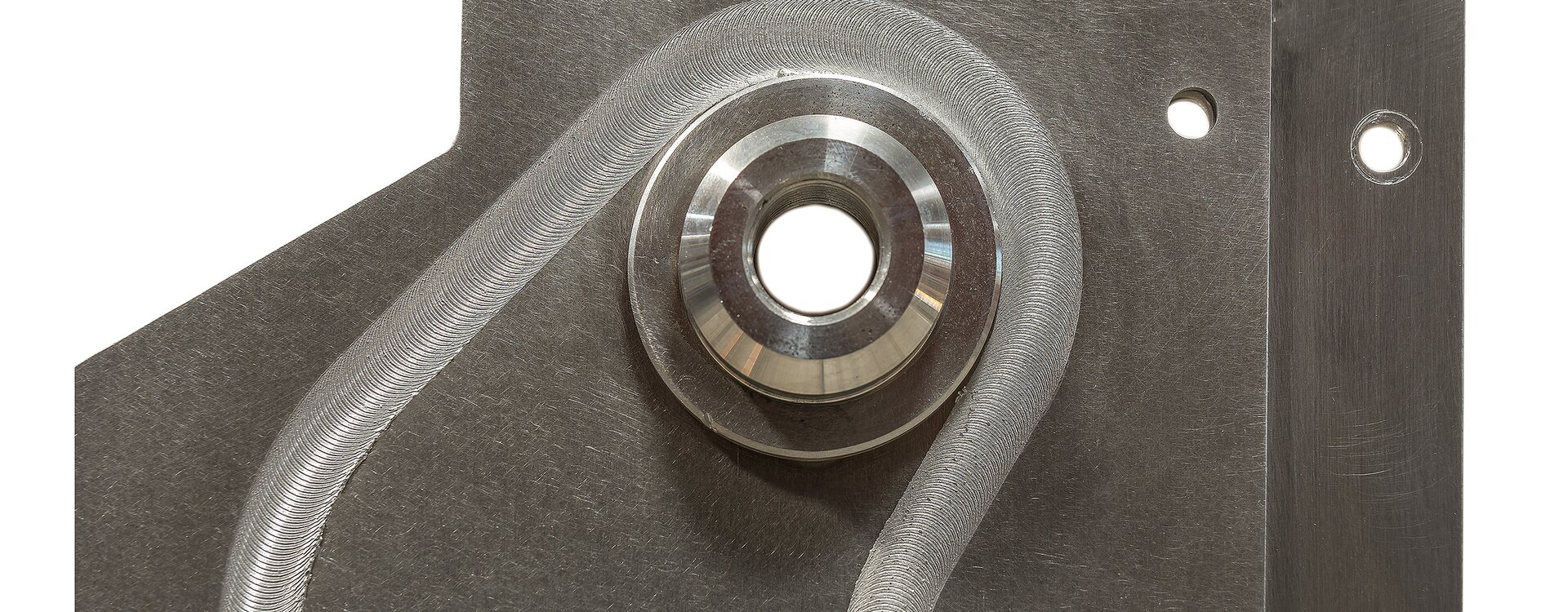
Friction stir welding FSW
Simple basic principle
Friction stir welding (FSW) is a mechanical joining process carried out in the solid state. The materials are joined not by locally melting the parts to be joined, but by stirring the plasticised materials together. A rotating tool is pressed into the components to be welded and joins them without the use of filler materials.
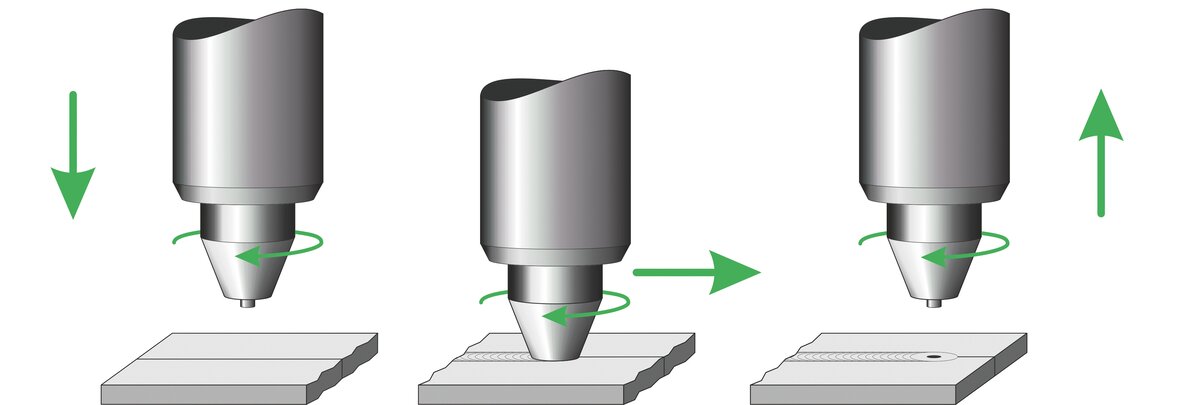
Maximum strength, reliable, and environmentally friendly. Different material thicknesses and mixed-material joints are welded with minimal distortion and a tight seal.
The innovative thermomechanical welding process is suitable for both existing applications and innovative new solutions. Cost-effective from small-scale to large-scale production. Applications range from plant engineering to aerospace technology.
Key success factors
- Maximum strength, both static and cyclic
- Minimal distortion and low residual welding stresses
- Porous-free, vacuum-tight welds
- Maximum process reliability through specialized NC systems
- Complex geometries can be realized
- A wide variety of combinations of material thicknesses and materials (aluminum, copper, steel)
- Material-friendly joining due to minimal microstructural changes
- Environmentally friendly due to low energy consumption, no additives, and no emissions


